Can Physical Therapists Sell Products to Patients?

Yes. Physical therapists can recommend products to patients — braces, supports, recovery tools — and earn from them, and occupational therapists and chiropractors do the same under their own professional codes. On a ShopDot storefront, ShopDot is the seller of record: it runs checkout, the supplier ships the order, and you earn a commission on what your patients buy. You recommend these items every day; the storefront gives patients a trusted place to buy the exact one you specified.
Do you have to tell patients you earn from the sale?
Yes. It's the one rule to get right. APTA's Code of Ethics for the Physical Therapy Profession, in effect since January 2026, states that PTs and PTAs "shall fully disclose any financial interest they have in products or services that they recommend to patients and clients or to the public" (Standard 6.5) (APTA).
Occupational therapists have a parallel standard. The AOTA 2025 Occupational Therapy Code of Ethics asks OT personnel to "provide relevant disclosures when participating in business arrangements" (Standard 1D) (AOTA). The American Chiropractic Association's Code of Ethics asks chiropractors to make decisions about nutritional products "in the best interest of the patient" (ACA); chiropractors should check their state board for its disclosure rules.
In practice that's one sentence: a line in your intake paperwork, or "I earn a small commission on this — buy it wherever you like" at handoff. A ShopDot storefront also tells patients, on its pages and at checkout, that ShopDot is the seller of record and that you earn a percentage of each sale, so the written disclosure sits where they buy. Your state board may have its own retail-sales language worth reading once.
A product recommendation is the home-care advice you give every day, with a place for the patient to act on it.
Why do patients want the exact product you specified?
When you tell a patient to pick up a specific brace, hinged knee support, or foam roller, you're solving a real problem, but you're also leaving them to find it on their own. They leave, forget the exact model, buy the wrong size on a marketplace, and show up next visit with something that doesn't fit the plan.
Giving them the exact product you specified, in one trusted place, keeps the plan intact between visits.
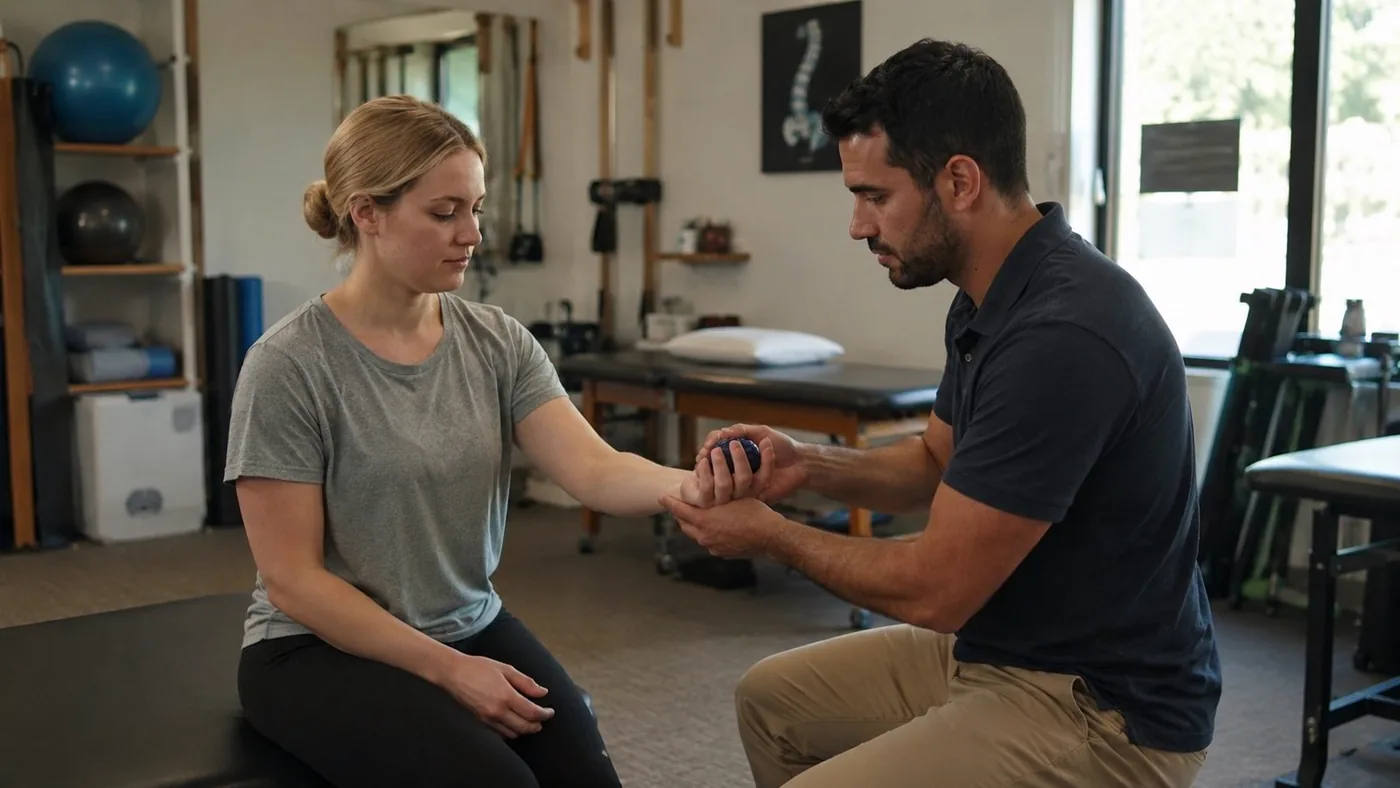
How does a product recommendation work day to day?
- You recommend the item during care, the same way you always have.
- You point the patient to your storefront — the exact brace, the right size.
- You disclose the relationship openly ("I earn a small commission; buy wherever you like").
- The plan of care stays the same — the storefront is where the patient acts on it.
Who sells, ships, and takes payment?
ShopDot is the seller of record and is named at checkout. The supplier holds the stock and ships each order directly to the patient. ShopDot is not part of insurance billing; patients pay for storefront products directly. The storefront never touches protected health information, so it stays outside your clinical records.
How does product revenue fit a cash-based practice?
For clinics building cash-based revenue, product recommendations add income outside the fee schedule. WebPT notes patients are far more likely to buy the braces, bands, and mobility tools they've used in the clinic, because they already know how to use them (WebPT). You earn a percentage of what patients buy on your recommendation.
How do you set up a storefront?
- Open a storefront and feature the braces, supports, and recovery tools you recommend.
- Share it — a QR code in the treatment room, a link in discharge instructions, a follow-up email.
- Disclose and let patients choose. Recommend the right way: name the exact item and say that you earn from it.
To help patients get the exact products you recommend between visits, see how ShopDot Health works →
FAQ
Can physical therapists sell products to patients?
Yes. PTs, OTs, and chiropractors commonly recommend braces, supports, and recovery tools and earn from them. On a ShopDot storefront, ShopDot is the seller of record and the supplier ships the order; you earn a commission. Disclose that interest — APTA's Code of Ethics (Standard 6.5) requires it — and check your state board's retail-sales provisions.
Is it legal or compliant?
Recommending products and earning from them is common across movement and rehab practices. The concrete obligation is disclosure: APTA's Code of Ethics (Standard 6.5) asks PTs and PTAs to fully disclose any financial interest in products they recommend. ShopDot storefronts tell patients, on the storefront and at checkout, that ShopDot is the seller of record and that you earn a percentage of each sale. Your state licensing board may add its own retail-sales provisions. (General guidance, not legal advice.)
Do I need to hold inventory?
No. ShopDot is the seller of record and the supplier ships each order directly to the patient. Patients pay for storefront products directly, and the storefront never touches protected health information.
How does this add cash-based revenue?
You earn from the recommendations you make in the treatment room, and that income grows with how much patients trust them.
Get the products you recommend to your patients
A storefront for the braces, supports, and recovery tools you name in the treatment room.
Early access