Can Physical Therapists Sell Products to Patients?

Yes. Physical therapists, occupational therapists, and chiropractors can recommend and sell products to patients — braces, supports, recovery tools. You already recommend these items every day; a storefront gives patients a trusted place to buy the exact one you specified. Keep it transparent and patient-first, and it's a natural extension of the home-care advice you already give.
Do you have to tell patients you earn from the sale?
Yes — and that's the one piece of housekeeping worth getting right. APTA's Code of Ethics for the Physical Therapy Profession, in effect since January 2026, states that PTs and PTAs "shall fully disclose any financial interest they have in products or services that they recommend to patients and clients or to the public" (Standard 6.5) (APTA). OTs and chiropractors have equivalent provisions through their own boards and associations.
In practice that's a sentence, not a process: a line in your intake paperwork, a note on the storefront itself, or "I earn a small commission on this — buy it wherever you like" at handoff. Your state board may have its own retail-sales language worth reading once.
A product recommendation is the home-care advice you already give, with a place for the patient to act on it.
Why patients actually want this
When you tell a patient to pick up a specific brace, hinged knee support, or foam roller, you're solving a real problem — but you're also handing them a research project. They leave, forget the exact model, buy the wrong size on a marketplace, and show up next visit with something that doesn't fit the plan.
Giving them the exact product you specified, in one trusted place, keeps the plan intact between visits. That's better care, not just a transaction.
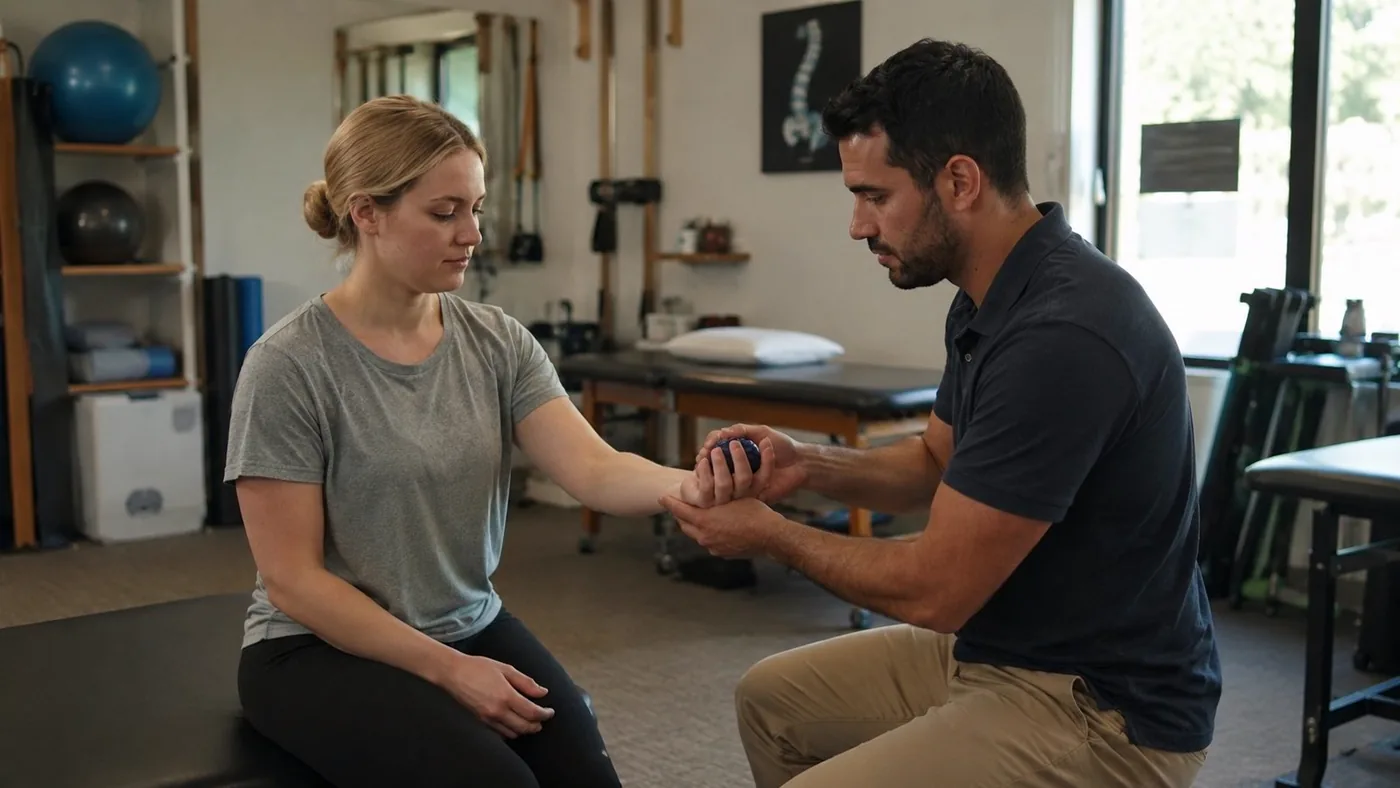
What it looks like in practice
- You recommend the item during care, the same way you always have.
- You point the patient to your storefront — the exact brace, the right size.
- You disclose the relationship openly ("I earn a small commission; buy wherever you like").
- The plan of care doesn't change — the storefront is just where the patient acts on it.
"No inventory, no PHI" — what that means for your clinic
You don't stock durable medical equipment, tie up cash in shelves, or manage shipping. A supplier fulfills and ships each order directly to the patient. Just as importantly, a storefront is nothing more than a catalog and a checkout — it never touches protected health information, so it stays cleanly outside your clinical records and compliance surface.
Retail as a cash-based revenue stream
For clinics building cash-based revenue, product recommendations add income without adding chair time or insurance headaches. WebPT notes patients are far more likely to buy the braces, bands, and mobility tools they've already used in the clinic — familiarity removes the guesswork and supports the home program (WebPT). You're monetizing expertise you already provide — the recommendation — rather than selling more appointments. It's one of the few revenue levers that scales with your reputation instead of your hours.
Getting set up
- Open a free storefront and add the braces, supports, and recovery tools you already recommend.
- Share it — a QR code in the treatment room, a link in discharge instructions, a follow-up email.
- Disclose and let patients choose. Recommend the right way, and the rest takes care of itself.
If you want the recovery products you recommend to actually reach your patients — correctly, and between visits — see how ShopDot Movement Health works →
FAQ
Can physical therapists sell products to patients?
Yes. PTs, OTs, and chiropractors commonly recommend and sell braces, supports, and recovery tools. Disclose any financial interest you have in what you recommend — APTA's Code of Ethics (Standard 6.5) requires it — and check your state board's retail-sales provisions.
Is it legal or compliant?
Selling products to patients is common and accepted across movement and rehab practices. The concrete obligation is disclosure: APTA's Code of Ethics (Standard 6.5) asks PTs and PTAs to fully disclose any financial interest in products they recommend. Your state licensing board may add its own retail-sales provisions. (General guidance, not legal advice.)
Do I need to hold inventory?
No. A supplier fulfills and ships each order directly to the patient. A storefront is just a catalog and a checkout — it never touches protected health information.
How does this add cash-based revenue?
It monetizes the recommendation you already give — without more chair time or insurance headaches. It's revenue that scales with your reputation, not your hours.
Get the products you recommend to your patients
A free storefront for the braces, supports, and recovery tools you already name in the treatment room.
Book a walkthrough